Sunday, November 13, 2016

BIRD NEWS:252


One last shot of my visiting woodpecker before I move on to the next subject.

It appears that I may have missed out sharing the photos I took on my Brighton/Bognor Regis excursion at the start of October. For this reason, here they are:


These show a wood pigeon on a lamppost at the pedestrian-road bridge between Angmering station and Angmering school that began my day out, as I headed towards the 700 bus stop.


Now we are in Bognor - at the beach...


And here we go with a city pigeon who wished to walk along the sidewalk ahead of me.

NOW we are back on schedule with an end of October round up of back yard information. Mr Bob, the sparrows, starlings and magpies have been busy these last 2-3 days of the month - but there has not been many other birds spotted since the woodpecker caught my attention.

Saturday, November 12, 2016

BIRD NEWS:251


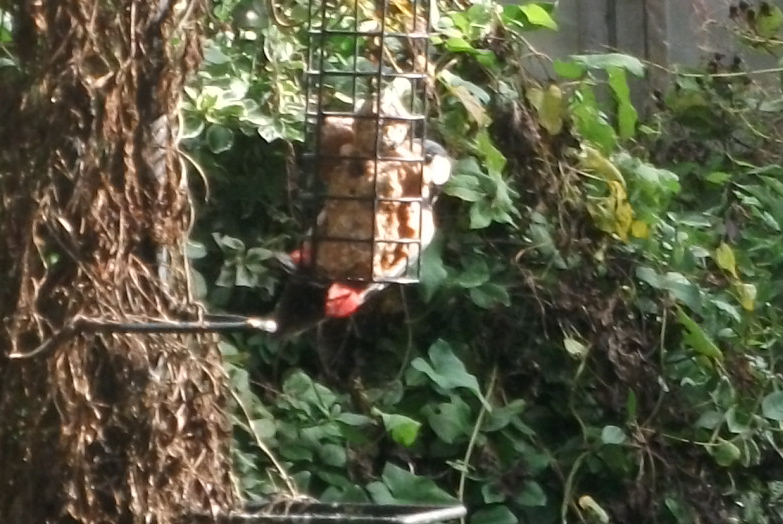
I took quite a few photographs of the Great Spotted Woodpecker as I have never seen one in our back yard before. Other than at Arundel, I had never seen any live woodpecker before. This one was tucking into the stale pieces of home-made bread and cake that I had left in the bird feeder under the fat balls as if it were this birds' favored food.


According to my bird ID books, the favored food SHOULD be 'insects, larvae, nuts and berries, as listed and additionally fruit, and scraps from bird tables, seeds, baby birds, and tree sap. We can now add homemade bread/cake to that list!


This bird is also known as the pied woodpecker. They mainly inhabit woodland, forests, anywhere amongst trees. They are known to nest in tree holes, many of which they themselves create. You can tell a male from a female, in that the male does and female does not have a red patch on their head - therefore, my personal visitor was male!

The courting ritual includes both sexes tapping special noises on chosen sites and mid-air dancing. The birds are resident to the UK and generally remain solitary apart from during the breeding season. Their eggs are laid in May-June and are creamy-white in color. Generally, 3-7 are laid.

Thursday, November 10, 2016

BIRD NEWS:250 & robin facts


The goldfinch was busy munching for a good five minutes and was soon joined by a sparrow on the nearby regular mixed seed holder. But not for long, the sparrow had left before the goldfinch had finished his feast. After finally taking its fill, the finch looked at the other seed holder - flew towards the bottom two feeding holes, failed to find a pole to rest on, so gave up. The sparrows have figured out how to feed from the lower two openings without a pole, but other birds need to use the top two holes to eat.


Above is the scene that greeted me late October while cooking my lunch. A pigeon flew down to munch dropped seed and crumbs of suet ball, while sparrows and starlings made crumbs...


It was the final week in October and I was feeling a little unsettled due to sinus issues. I was baking my lunch and happened to glance out of the kitchen window. This is what I saw...


Something colorful with a red bum, pecking away at the stale bread and cake in the bird feeder. It turned around and I got a better shot - a great spotted woodpecker!!


CLICK HERE to find out all about the UK robin.

Sunday, November 6, 2016

BIRD NEWS:249


Well, after all the swans and tits, a pigeon is called for! Here is one of the show pigeons from the cafe roof nibbling away with a jackdaw under a duck-feeding station.

Another board offers information to relieve regular readers of my continuous pictures of swans and pigeons. We do not seem to have bullfinches at home, though I might once have spotted one shortly after arriving back in the country after 22 years in Australia. I was not very aware of British bird species at the time, however, so it is hard for me to tell.


This info board might have been shown before - but in the shot you can see the living example of magpie geese on the island at the rear. In the close up you can see that like the swans, much preening and wing-flapping is going on.


It was time for coffee at the cafe. At first, I did not think I would see the all-white show pigeon on this trip, but once some visitors began throwing feed down, there he was! A beautiful ending shot for my Mid-October visit to Arundel.


Back home, and as October passes the midway border, I spotted a goldfinch munching niger seed.

Friday, November 4, 2016

BIRD NEWS:248


My first shot above shows a blue tit and a great tit at one feeder. I then got a shot of a great tit sitting on a tree waiting to get to the feeder for its turn opposite a blue tit...


I managed to get a couple of close-up shots of the great tit when it flew across to another feeder.


In the second of the above pictures, you can see a coal tit sitting nearby watching. The way to tell the difference is twofold - firstly, the coat tit is slightly smaller and secondly it is more buffy than bright yellow in chest coloring than the great tit, though both have similar head markings.


Next, a blue tit and coal tit. Finally for today, an info board inside the hide that offers more information on how to tell the various tits from one another.


Thursday, November 3, 2016

BIRD NEWS:247


Either another form of heron or an egret of some sort was wading to the left and came out clearer being white rather than grey. You can also see a couple of gulls gliding past.


I walked back past the trumpeter swan family - still busy preening. Next, here is another info-board. I have not actually spotted one of these gadwells, I don't think - perhaps next trip - or perhaps I did and did not notice them.


I will look out for one of these fellows - but have not as yet spotted one back home. I wandered past the open-air feeder station on the reedbed walk as nothing was happening on this trip, but inside the woodland hide there were 4 tits. I spotted great tits, blue tits, march tits and coal tits on this trip.

Sunday, October 30, 2016

BIRD NEWS:246


Preen, preen, preen... The adult trumpeter swans amassed much down upon the beak, while the youths just nibbled, bit and licked. I walked around the corner towards the hide and got a few better shots. You might be able to see the feathers stuck to the adult's beak in these next shots.


Yes, as per the former swans, the adults were also wing-flapping after feather sucking. In the last of the above photos, you can see the closest adult rubbing the stuck feathers from its beak...


...before going at it again.

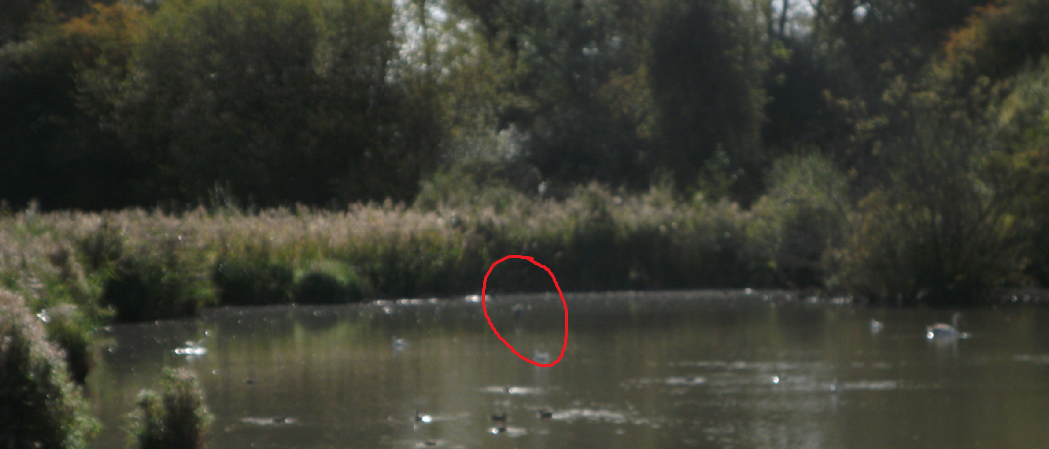
I wandered into a hide. The first hide had not had much activity in sight - just a few gulls and a couple of ducks, so I did not take any photos. In the second or third hide, I caught sight of a heron however - at a distance. So far distant, I circled it for clarity.